Monday, November 22, 2010

A woman explores the anti-social side of social media


A woman has moved in donated furniture, exercise equipment and a large-screen computer with a projector overhead so everyone walking by can see as she tweets, updates her Facebook page and Skypes. During her 30 day stay in this "cell" no one comes in and she never goes outside. Her only contact with other people is through technology. She wants to explore how social media has changed the way people communicate.

This is an experiment to see how social we are really being through social media outlets. It explores how social media can be beneficial for people that live states or countries a part but how it may be detrimental for actual social interaction with people we come in contact on a more regular basis.

Article

Do you feel like you've become more disconnected to people you see regularly because of social media?

TSA Chief is Warning Against Boycott of Airport Scans

TSA Article

We have discussed the whole body scan that is being conducted at the airports and how much controversy they have brought along with them. Since there are so many people upset about these body scans, TSA is warning people against attempting to boycott the scans. Wednesday is one of the busiest fly days of the year and if people attempt to boycott the scans, the entire airport could back causing a much greater amount of frustration. It should be interesting to see whether or not people will try to boycott the scans... my prediction? Some people will still try to be an activist and will cause trouble for everyone trying to fly to see their families.

Sunday, November 21, 2010

Nasty 'Nazi' Comment (Follow up to NPR Case Study)

Fox News CEO Ailes: NPR Execs Have Nazi Attitude

Fox New's CEO, Roger Ailes, seriously criticized NPR for the way the handled the firing of Juan Williams by stating, "They are, of course, Nazis. They have a kind of Nazi attitude. They are the left wing of Nazism. These guys don't want any other point of view."

He was heavily criticized by the public for his comments and apologized to a Jewish civil rights group. He later discussed his use of words and said that if he could take it back he would have much rather have called NPR 'nasty inflexible bigots.'

This is pretty racy language to be used in interviews.

Monday, November 15, 2010

Does George Bush Think Before He Speaks?


During an interview with Matt Lauer former President of the UNITED STATES of AMERICA George Bush says his lowest moment as president was when Kanye West said he did not care about black people.... what about the war in Iraq and the collapse of the entire economy!!!!??? This article examines this statement from a hip-hop perspective.
Many people were very surprised at the absence of Bush during the mid-term elections. I would've thought he'd be publicly supporting some of the Republican candidates considering many of the races were so close this year. But of course why would he want to stumble over his words or say something outrageous in public right before the debut of his book.

Instead, he decided to wait until after the mid-term elections to say something so unbelievable on an NBC evening telecast with Lauer. I'm curious about the amount of patience Bush's PR team has with him.

Sunday, November 14, 2010

Carnival's PR Crisis- What they got right and what they got wrong


On Thursday, 4,500 passengers and crew members from Carnival's stranded cruise liner arrived safely on land. Passengers had been stranded for 72 hours without electricity due to a fire in the ship's engine room. These articles address the PR strategies Carnival used during this crisis.

On one hand, this article hails Carnival's PR strategies as impressive due to the company's fast response, the crew's competence in containing the danger with no injuries, the provision of timely information to the media, and the company's efforts to compensate the passengers. From all indications, Carnival had a very good crisis management plan in place to deal with such incidents.

On the other hand, this article provides a more balanced analysis of the incident, especially its use of social media websites in dealing with the crisis. What struck me was the author's mention of how Carnival should have changed its profile picture on Facebook since it was too light-hearted. It seems to me that every detail counts when it comes to crisis management.

It will be interesting to see how Carnival tries to restore its image in months to come especially since it involves convincing people to put their lives at risk by going on one of its cruises. Which of their publics will they appeal to? What messages are they likely to use?

Friday, November 12, 2010

Old Spice

There's a funny Old Spice commercial that most of you are probably familiar with. It's sort of random, but funny, and very popular (on Youtube, it has over 23 million hits). A lot of people have re-made it, including the library at BYU. What I hadn't ever noticed is that if you go to the original video and scroll down, on the right hand side there are a bunch of videos the Old Spice guy has made that are in response to tweets he received (they all begin with Re: @). All of his other videos have millions of views as well, so people are definitely following him. A lot of the videos are in response to "regular" people, and some are to celebrities.

I thought this was such a great PR strategy. It's a very original way to use social media, and it makes the campaign interactive and fun. It looks like most of the videos were posted all together in July, so I'm not sure the campaign ran that long, but I'm sure people like me who are just discovering it are still watching the videos.

Crisis Management for Chinese Government?

Saw this article in New York Times: "Assertive Chinese Held in Mental Wards."

It tells the story of a Chinese farmer, Xu Lindong, who was imprisoned in the Zhumadian Psychiatric Hospital for four years after he filed a series of complaints against the Chinese government after being angered by a land dispute. Lindong was not in the least bit deranged.

The government's reaction was to commit him to a mental hospital and, as the article says, "forge his brother's name on the signature line." He even received 54 electrical shock treatments while there, as well as routine injections of powerful drugs. Human rights activists suggest that incidents like Lindong's are not uncommon, and on the rise, because the government wants to silence troublemakers.

The Chinese government is notorious for censorship. For example, in 2009 it completely blocked Facebook. However, this incident seems unnecessarily severe. Is the Chinese government justified in its hasty imprisonment and forgery?

If you were asked to do PR for the Chinese government around the Lindong incident, what would you do?

Thursday, November 11, 2010

Google's oops

Google has recently made the news for offering its 23,000 a 10% raise and a $1000 bonus. Sounds like a great time to work at Google. Unless you're the employee who accidentally leaked the memo making this announcement.

According to the LA Times, Google immediately fired the employee responsible for releasing the info to the press. When asked about the incident, a Google spokesman stated that, "We don't comment on personal matters." To me, this doesn't seem like a great response by a company who one would imagine has a pretty well-staffed and (apparently) well-paid PR department. Moreover, if Google sent out a memo to its 23,000 employees containing this information, the rest of the 'public' was likely to find out at some point anyway. I'm not very familiar with Google's press activity, but this seems a little drastic to me.

Tuesday, November 9, 2010

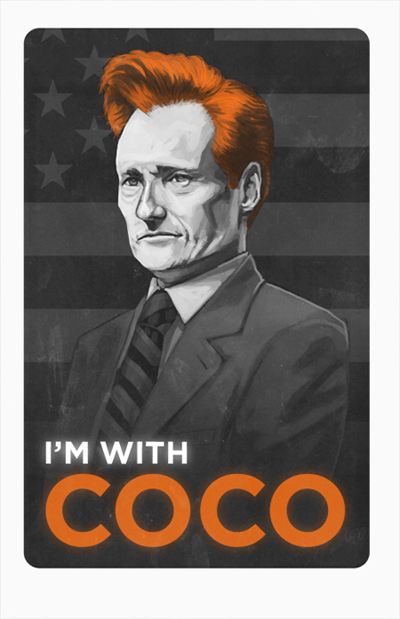
Team Coco Prevails!


There was a lot of controversy back in January about Conan O'Briens leaving NBC's "The Tonight Show" because Jay Leno wanted his old job back.


Last night "Conan" premiered on TBS capturing an audience of 4.2 million. This show dramatically beat out all other competition. What really interests me is how 3.3 million of "Conan" viewers were in the 18-49 demographic. This is more than 3 times the amount of viewers in this demographic that viewed Jay Leno's "Tonight Show" and 2.5 times the amount of viewers in this demo that viewed David Letterman's "Late Show."

I am curious of how "Conan" attracted so many more viewers out of this demographic. Was it his hilarious promos and his never-ending tweets concerning his show?

Putting Performance Reviews On Probation


I found this article extremely interesting. It has to do with employee reviews that are done at most organizations. These reviews have recently come under controversy because these reviews make it impossible to have open, honest conversations with employers.


This can potentially make for a very unhappy internal public. And shuts down open communication. I just thought this is a very interesting aspect of most employee's relationship with their employer.

Company Accused of Firing Over Facebook Post

What happens to an employee's rights when they work for a private company?  Should they give up any right to privacy or free speech rights as part of their employment?
http://www.nytimes.com/2010/11/09/business/09facebook.html?emc=eta1

Sunday, November 7, 2010

Attack on Domino's

I just wanted to post this as a follow-up to the Domino's group. I saw this billboard today on Colorado (the first shown in this blog posting). With all of the political attack ads that have been around lately, I thought it was interesting to see a pizza company attack ad. Do you think an ad like this will be successful? Should Domino's respond? If so, how?

NPR Case Study

Jen Cupp
Leanna Dillon
Jennifer Davis
Kelly Burt


A. Brief History and Background

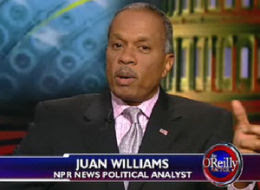
In October 2010, NPR fired Juan Williams, a longtime correspondent and political analyst for NPR. The firing came after controversial remarks Williams made on The O'Reilly Factor show on FOX News.

The bulk of the controversy centered around a statement Williams made in response to a polemic question by the show's host, Bill O'Reilly: "But when I get on the plane, I got to tell you, if I see people who are in Muslim garb and I think, you know, they are identifying themselves first and foremost as Muslims, I get worried. I get nervous," Williams said.

Later in the show Williams cautioned Americans to not think of all Muslims as extremists. However, NPR still fired him the following day for his original comment, which garnered strong criticism (both the comment and the firing).

Williams had become a liability to NPR, at least in the view of the station's executives, because of his repeated appearances (and comments) on FOX News, particularly its prime-time talk shows. NPR initially moved him from correspondent to analyst after he took distinct policy positions in comments on FOX News and in editorials for print news. NPR's management was worried about the credibility of Williams and its own reputation as a news source, given his "reporter by day, pundit by night" persona.

Williams's statement on The O'Reilly Factor was the final straw--NPR said these remarks were ultimately inconsistent with its editorial standards and practices, pointing to its code of ethics as reason enough to fire Williams.

NPR at first was fairly quiet about the ordeal, releasing a simple statement (and story) on the day it fired Williams explaining its decision based on its code of ethics. The Internet lit up with comments criticizing Williams and NPR. Some praised the firing; others denounced it. NPR did little to respond to these comments. The NPR ombudsman released a report later that day, concluding that NPR had mishandled the firing, but was justified in doing it.

B. Key Stakeholders

Internal:

* NPR employees
* NPR management, including CEO Vivian Schiller
* Shareholders

External:

* NPR listeners, viewers, and readers
* Government (as NPR was created by congressional passage of the Public Broadcasting Act)
* Related organizations Public Broadcasting Service (PBS) and the Corporation for Public Broadcasting
* Competitors (local and national radio news programs)
* Fox News (acquired Juan Williams after his firing)
* Other media

C. Political, Social/Cultural, and Economic Factors

Political Factors:

The U.S. is deeply divided between liberal and conservative viewpoints. There is an election currently underway which will affect the leadership of the U.S. During election season, everything becomes politicized. NPR has been considered "left leaning" because of firing Juan Williams for expressing his fear about Muslims. Conservatives tend to view the firing as unfair, while many liberals view it as justified.

Social/Cultural Factors:

The firing took place during a time when the ground zero mosque was/is still being debated. "Islamophobia" is becoming a widespread trend, and the question of whether Muslims are to blame for 9/11 is on a lot of people's minds based on the media's agenda. Bill O'Reilly recently blamed Muslims for 9/11 while on "The View." American culture, through the media, is marking Muslims as villains. This isn't necessarily new, but continues to be a current trend. This is an issue that, like being liberal or conservative, divides people.

Economic Factors:

The U.S. is in an economic downturn. This has instilled fear in many people about many issues related to money. There are fears of job security, being able to pay bills, mortgages, rent, etc. Most people have less extra money and this conflict has created a situation where many people will no longer contribute to NPR because of the firing. People want someone to blame. It's easy to blame Muslims for the state the U.S. is in now. If Muslims are to blame for 9/11, then they are also to blame for the situation we are now in economically and for the war in Iraq.

D. Potential Solutions to the Problem

NPR could have approached this problem in the following different ways:

Instead of firing Juan Williams, NPR could have suspended him or waited until his contract ran out. Suspension would have shown that NPR does not agree with Williams's remarks about Muslims while still keeping him as an employee. Suspension may have also suggested that NPR was carefully planning a fair course of action and consequences for Juan Williams.

NPR could have also been more willing to discuss the situation with Williams instead of taking such immediate and severe action. Williams expressed his dissatisfaction with the lack of specificity NPR showed in explaining its decision. In an appearance on FOX News, Williams said he was told his contract was terminated without an opportunity to come into NPR and discuss the termination. It is important for any type of business to address firing an employee with consideration, disclosure, and respect.

Today, NPR can alleviate some PR pressure by giving out a detailed explanation of the circumstances that led to the firing of Juan Williams. Instead of only mentioning its ethics code, NPR could point out and state certain sections that it feels Williams violated, while reiterating to the public NPR's commitment to ethically sound journalism.

Questions:

1. In what ways was it appropriate and inappropriate for NPR to base the firing of Juan Williams on a violation of their ethics code without giving him a specific explanation of how his remarks crossed the line?

2. Do you think that NPR will lose a significant amount of funding because of either Williams's comment or because of how they handled the situation? Has your own perception of NPR changed?

3. In a recent interview with FOX News, where Williams is now a full time contributor, Williams offered a rebuttal to NPR's decision by saying: "And now they have used an honest statement of feeling as basis for a charge of bigotry to create a basis for firing me. Well, now that I no longer work for NPR let me give you my opinion. This is an outrageous violation of journalistic standards and ethics by management that has no use for a diversity of opinion, ideas or a diversity of staff (I was the only black male on the air). This is evidence of one-party rule and one sided thinking at NPR that leads to enforced ideology, speech and writing. It leads to people, especially journalists, being sent to the gulag for raising the wrong questions and displaying independence of thought." Do you agree with Williams? Is NPR hypocritical to fire Williams based on ethics, when he asserts that their own decision was unethical? What does his firing say, if anything, about the media and freedom of speech?

4. What kind of strategy do you think it is, if any, for FOX News to hire Juan Williams full time after the comments he made on its program, The O'Reilly Factor, and his subsequent firing from NPR?

Friday, November 5, 2010

MSNBC suspends Keith Olberman...

http://news.yahoo.com/s/yblog_upshot/20101105/bs_yblog_upshot/msnbc-suspends-olbermann-over-political-contributions

There's been a lot of controversy over how MSNBC covered the elections. It turns out that Keith Olberman donated to several liberal candidates and didn't disclose this before going on air to cover the election. He has been suspended indefinitely without pay...

There seems to be a lot of this coming out lately... Do you think it's fair to suspend him even though he (and many others on the show) are obviously liberal themselves? Does it make a difference to a viewer if he makes monetary contributions?

Is this going to affect viewership of MSNBC?

Sunday, October 31, 2010

"On the road to political extremism"

"On the road to political extremism"

"Very interesting commentary about Jon Stewart's/Colbert's political rally "to restore sanity," written by an Australian business prof who is a visiting prof at Harvard University.    He described the rally as a caricature of political rallies, which is not surprising. 

I really like his statement:
"It is the rule that disproves the exception. For while reasonableness brought in the crowd, extremism - even overtly false extremism - kept their attention for three hours. While other news organisations in the US would not be as overt, they are playing on the same things to drive demand. In fact, reasonableness only has a chance of being entertainment in an environment where extremists are taken seriously."

Did any of you watch/attend this rally?  What was your impression?

Friday, October 29, 2010

Politics In The Social Media Age: How Tweet It Is

I saw this story about politics and social media on NRP and thought I'd share. It talks about how many politicians are using social media to keep constituents and the media up to date.

The article says, "There is much talk among the panelists of 'authenticity' — the notion that a candidate who sends out her own online messages and interacts with voters electronically is perceived as more real than a candidate who doesn't, or who leaves the tasks up to staff members." In my opinion, it's very important for politicians to jump on the social media bandwagon. It's a quick and easy way for them to get their message out to a lot of people.

The article is pretty interesting and also gives some examples of "well-wired" politicians.


Sunday, October 24, 2010

Domino's Pizza Blog Post

Katie Roberts-Kremer

Heather Smith

Kirsten Carlson

Emily Williams

Group Case Study

Domino’s Pizza

1. Situational Analysis

a. Brief History:

Domino’s received an unexpected blow to their brand in April of 2009. Two Dominos’ employees, Kristy Hammonds and Michael Setzer, who worked at a store in the small town of Conover, North Carolina recorded a video of the two using unsanitary and frankly disgusting means of preparing food they later delivered to customers. The video shows the employees passing gas onto a sandwich, putting cheese into their nostrils and then placing it on a sandwich, sneezing into the food, and bragging about other disgusting things they do to food. This video was leaked and went public via YouTube and Domino’s reputation was immediately stained.

In response to the all of the controversy, Domino’s President, Patrick Doyle released his own YouTube video. The video has been criticized because he is obviously reading from a script and he barely looks at the camera. The two employees were fired and charged with one felony count of distributing prohibited foods each. Hammonds was a registered sex offender and had other previous charges, Domino’s is also being criticized for their hiring policies. They responded by stating they will be revaluating their hiring policies and will make them stricter.

Domino’s also has recently come out with new commercials where they respond directly to customers’ complaints about their food along with commercials promoting their new, revamped menu.

b. Key Stakeholders:

Internal:

· Employees

· President, Patrick Doyle

· Shareholders

· Franchise Owners

External:

· Customers

· United States Department of Health

· Competitors (pizza restaurants such as Pizza Hut, Papa John’s, Round Table, Sbarro, and Little Caesars)

c. Political, Social, Economic, and Cultural Factors

Political:

The Domino’s Pizza video scandal brings to light several legal issues, food safety being among the most important. For a national chain who sells nearly 1 million pizzas each day, any food safety or health issue can be devastating. The images of employees making sandwiches and pizzas with blatant disregard to food safety standards as well as intentionally contaminating food products were a serious blow to Domino’s reputation. Following the YouTube video, Domino’s instituted a more stringent food safety training regimen for employees and has commented on the importance of food safety in the food production process as well. Ultimately, it is up to Domino’s customers to decide whether the company has done enough to reassure them of the safety and sanitation of the chain’s food.

Economic:

The economic effects of the YouTube video were twofold: the company’s reputation and share value suffered and the franchise in which the video took place suffered. Though often overlooked in respect to a scandal that affects the overall brand, the local Domino’s Pizza where the video was filmed was forced to complete a health inspection and dispose of hundreds of dollars of products. Moreover, Domino’s shares dropped by 10% in less than a week.

Cultural:

The impact of the YouTube video was detrimental not only to the company’s external reputation but also its internal reputation. While customers are of course the most important people to please in food service, there is no service without employees. For a nation-wide company like Domino’s, maintaining an employee culture of trust, respect, and fun is among their top priorities. However, when even two of the many thousand Domino’s employees break with the mission of the company, everyone pays the price. Of course, as a result of their behavior the employees featured in the video were fired and charged with delivering prohibited foods. But what about the other employees? The question for Domino’s is how to maintain (or re-establish) a culture of trust and mutual respect between employee and management without infringing upon the employees sense of privacy and individual responsibility. No one wants to work with Big Brother watching over their shoulder 24/7.

Social:

Social Media lies at the heart of both the problem and solution to the Domino’s Pizza scandal. An otherwise unremarkable yet unpleasant event became a national PR nightmare when the employees chose to post their video on youtube.com. In a matter of days, the video had had over 1 million hits. Domino’s had several choices in how to respond to the scandal and ultimately, chose the same route that got them into the trouble in the first place. By responding through YouTube videos and Twitter (@dpzinfo), rather than press releases and other traditional avenues, Domino’s was able to reach their target audience as quickly as the initial problematic video had. In addition, by adding Twitter to their initial response, and eventually their ‘showusyourpizza.com’ ads, has created a two-way symmetrical response to the issue, allowing their customers to engage in dialogue with the company.

d. Potential Solutions:

Domino’s Pizza could have better handled their response to the video scandal by:

1. Responding immediately rather than waiting several days in hopes that the video buzz might diminish. Better crisis management might have helped Domino’s to quiet the issue before it became nation-wide news. Their late response seemed to show their lack of preparation for a crisis such as the video.

2. One solution suggested by Brandseye.com was to utilize a program designed to monitor a company’s online reputation. While certainly a reasonable suggestion, perhaps a better method of issues management would be instituting a company policy on social media that both embraces it and outlines particular rules to guard against abuse.

Questions:

1. Domino’s has recently done a new marketing and commercial campaign illustrating that they are responding to peoples’ complaints and dissatisfaction with their pizzas. This campaign does not directly address the YouTube video. Do you think Domino’s should directly address the issue in a nationwide campaign? Why or why not?

2. Beyond dealing with the negligent employees, what responsibility does Domino’s have to address the issue of food safety in their restaurants? Has your perception of food quality been tainted by rumors and/or leaked videos such as this?

3. Do you think that this situation would have been so publicized if it wasn’t for social media? Could the situation have been avoided if Domino’s had a previously established code regarding social media use in the workplace?

How To Make A Viral Video

I find it fascinating how popular viral videos can become. It is interesting to see how fast videos become internet sensations through sites like youtube.com. Perhaps one of the first instances of a video going viral was with OK Go’s music video for “Here it goes again.” This video first showed up more than 4 years ago and currently has almost 53 million views. OK Go has had little mainstream success but they are huge internet sensations. One of their videos just released this month already has 6 million views. Here is a CNN interview done with OK Go discussing how to make viral videos. If you don’t have time to read the whole interview here is a short except on how OK Go views the Internet as freeing and revolutionary.

CNN: How has the internet changed the way you communicate with your audience?

It's difficult to answer the question because embedded in the question is this idea that the internet is this separate space now. And it's hard for me to see the digital space as a distinct annex of physical space. Everything you will do to make this story will go through a computer.

All of my communication is online, half of our art has been online, and so our social spaces are all online. It's like the internet has changed our communication with our fans in the way it has changed our communication with everyone in the world.

However, trying to look at it in sort of a more traditional light, it's been completely revolutionary and completely freeing. We never particularly wanted to have our work mediated by anyone else ... The internet has allowed for us to sidestep a lot of those [corporate, radio, TV and record label] agendas by making stuff that we can give directly to people, and by relying on a smaller number of people to care more rather than getting more and more bodies through the line at Wal-Mart.

Friday, October 22, 2010

NPR firing a PR crisis?

Ok, so I'm going to bring it up because I love controversy. What do you all think about NPR's firing of Juan Williams over his comments on The O'Reilly Factor show on Fox's cable news channel?

So far, think that NPR has done little to address it. I've mainly heard criticism directed toward it for this action, but some people applauded it as well. I read the statement they released about why they fired Williams, but haven't seen many other PR measures. I didn't even see anything about it on their Twitter page (compared to other news outlets I follow who tweeted articles addressing it). The NPR ombudsman did publish a report noting that NPR handled the firing poorly (does this count as PR? It was a very good report, but longer than most people have the stamina/perseverance to read online I think).

It seems that major media outlets seem to use a strategy of ignoring PR issues when they arise (i.e. my group's case study of The New York Times) instead of addressing them. Is this a good strategy?

I think that strategy has its pros and cons. It could help the issue not become a bigger deal by keeping quiet about it, but it also means that other people have the opportunity to frame it and speak for it when the media outlet chooses to keep quiet about it.

This issue is really messy. It involves deeper layers of nationalism, identity, history, etc. But how could NPR have addressed this better?

It was also interesting to note that NPR cited its decision as based on its code of ethics. Perhaps this shows the importance of an organizational code of ethics. In times of controversy or questionable procedures, turning to the code of ethics may help a company chart a principled course it can stand on amid criticism.

Thursday, October 21, 2010

Companies Using Twitter to Announce Jobs

I can't say this really surprised me, but with all of our class discussion about social media I found it interesting that companies are now using Twitter to announce holiday jobs. UPS, Crate and Barrel, and Kohls are some of the companies that are using Twitter to recruit holiday staff. Interestingly, Crate and Barrel said that they didn't receive nearly as many inquires as they had anticipated. I wonder if it's because Twitter isn't narrowly focused, so the chance that people in Edina Minnesota saw the tweet is small, or if people just aren't aware that they can use Twitter to look for jobs.

The article talks about how job seekers need to start using Twitter more often to look for job openings because it enables them to find out about them first, giving them a better chance at getting the job. I'm sure that in the future, more companies and job seekers will start utilizing Twitter.

Here's the article.